
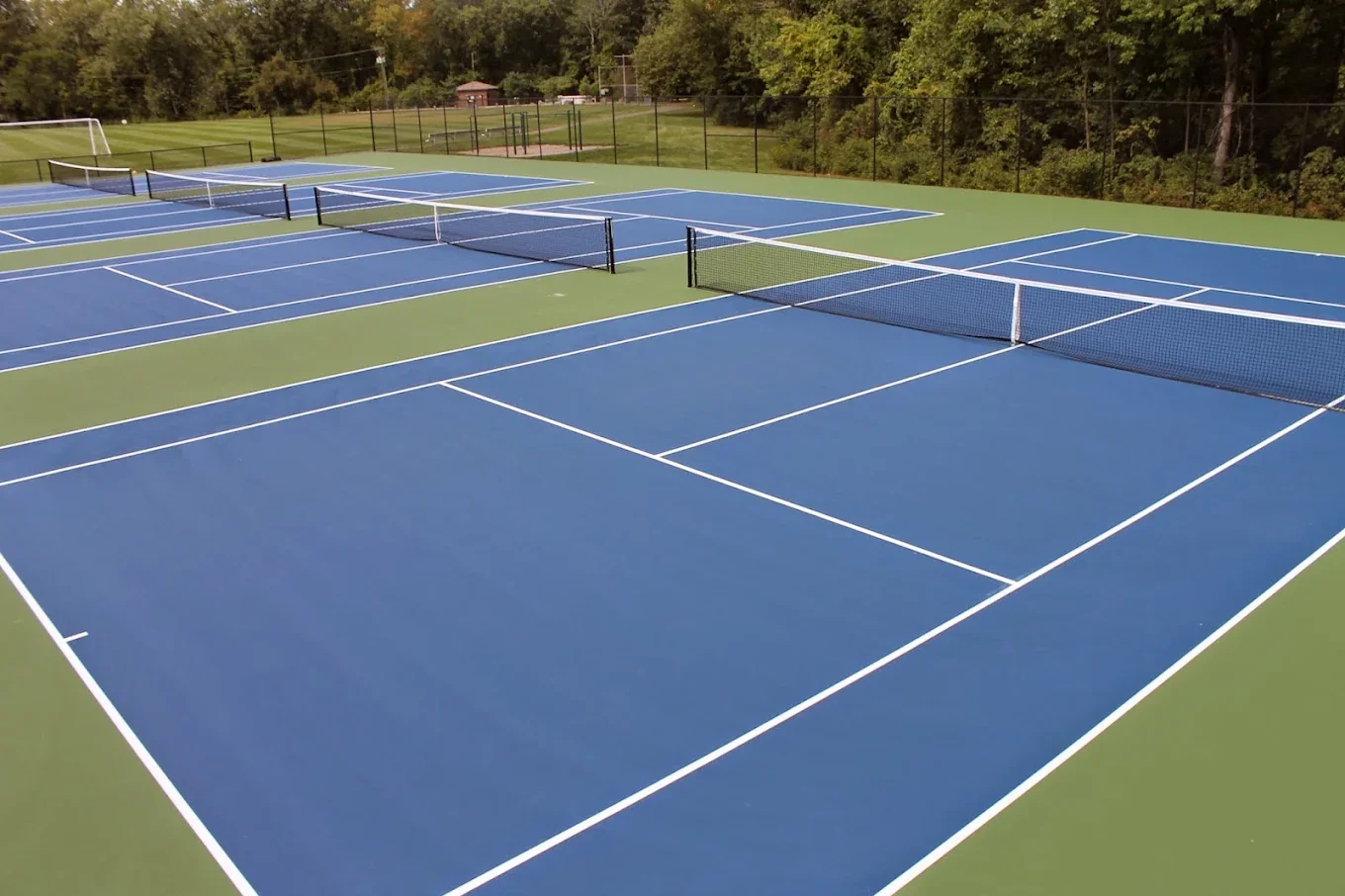
Our Specialty in CT & NY
Post-Tension Tennis Courts
Award-Winning Construction
Concrete Courts Built to Resist Cracking
If you’ve ever owned an asphalt court in New England, you know the routine. A few winters go by, cracks show up, you patch them, and they come right back. Post-tension courts are built to break that cycle.
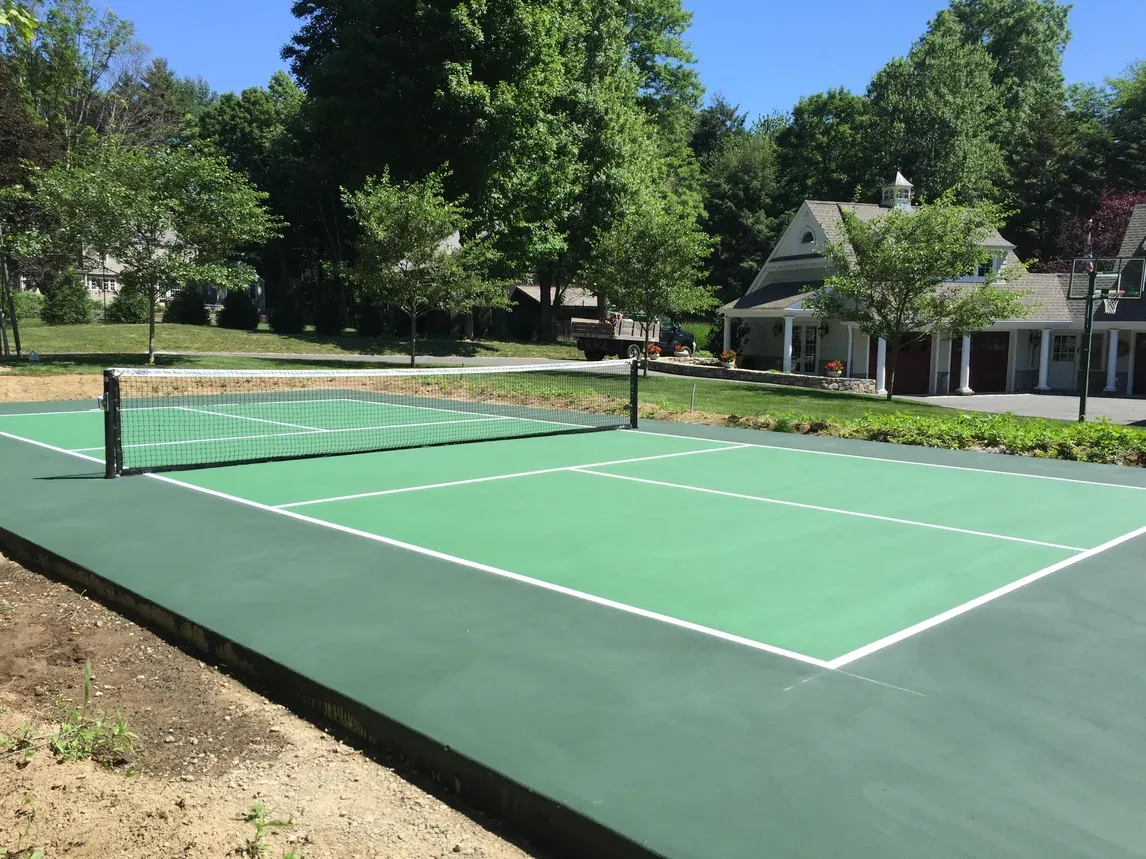
Post-tension is our specialty at R.S. Site & Sports. We’re certified by the Post Tensioning Institute and received its 2015 Award of Merit for slab-on-ground construction. When you choose a post-tension tennis court, you’re getting a smooth, joint-free playing surface that stands up to freeze and thaw, shifting soil, and years of play with very little upkeep.
How It Works
What Is a Post-Tension Court?
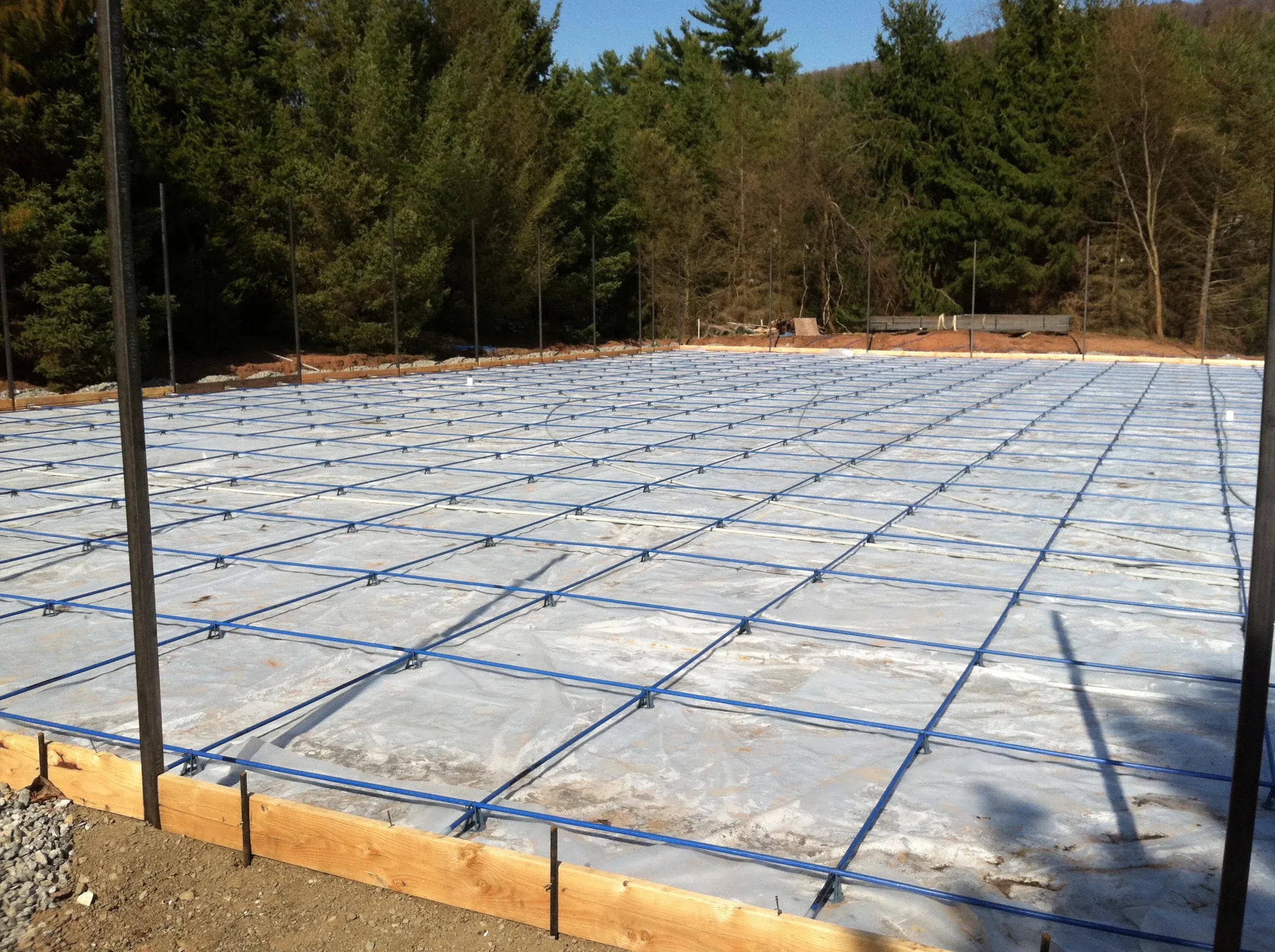
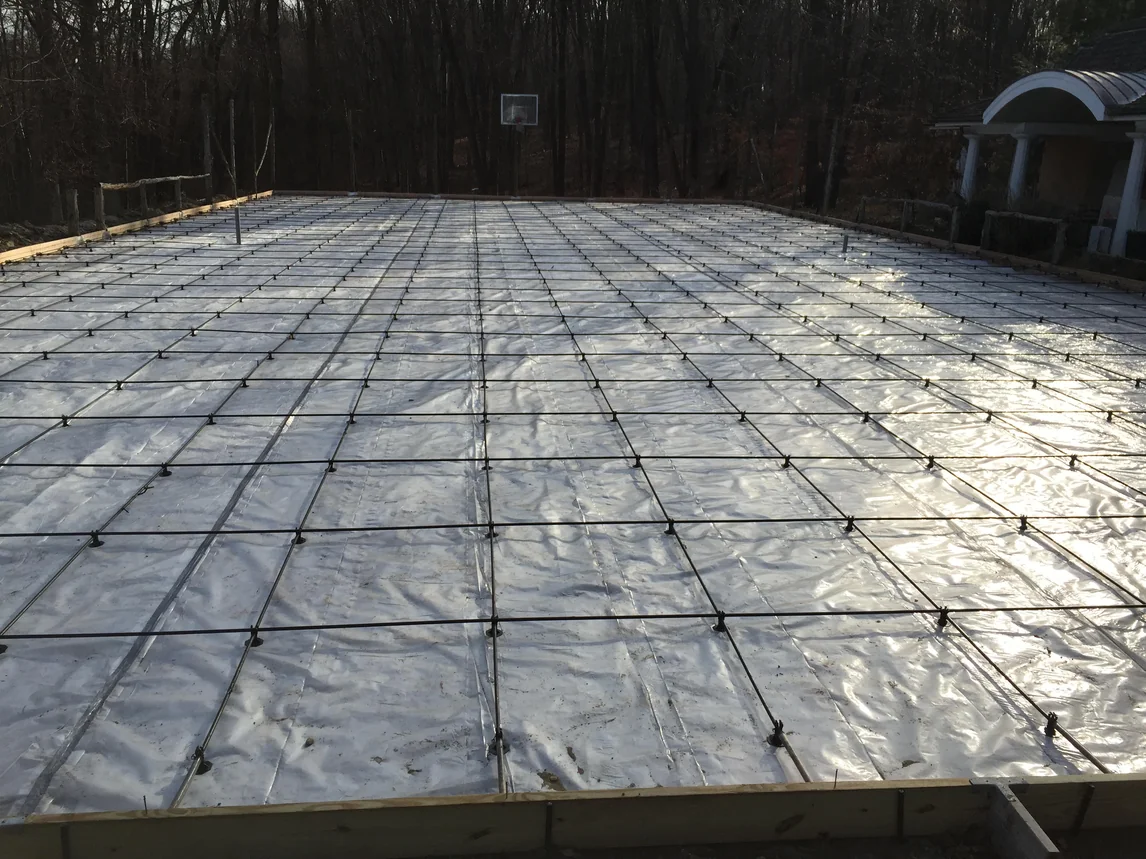
Post-tensioning strengthens concrete with high-strength steel tendons. It’s the same method used in bridges, parking structures, and sports stadiums. Picture a row of wooden blocks strung on a rubber band. Hold the ends loosely and the blocks sag. Twist the band tight and the blocks press together into one straight, solid piece. That tightened band is how a post-tension tendon works inside your court.
High-strength steel tendons are laid in a grid across the court
Concrete is poured over and around the tendons
Once the concrete cures, hydraulic jacks stretch each tendon tight
Wedge-type anchors lock the tendons in place at the edges
The slab stays in constant compression for the life of the court
Courts We Build
Post-Tension Courts for Every Sport
The same strength that makes post-tension ideal for tennis works for nearly any outdoor court.
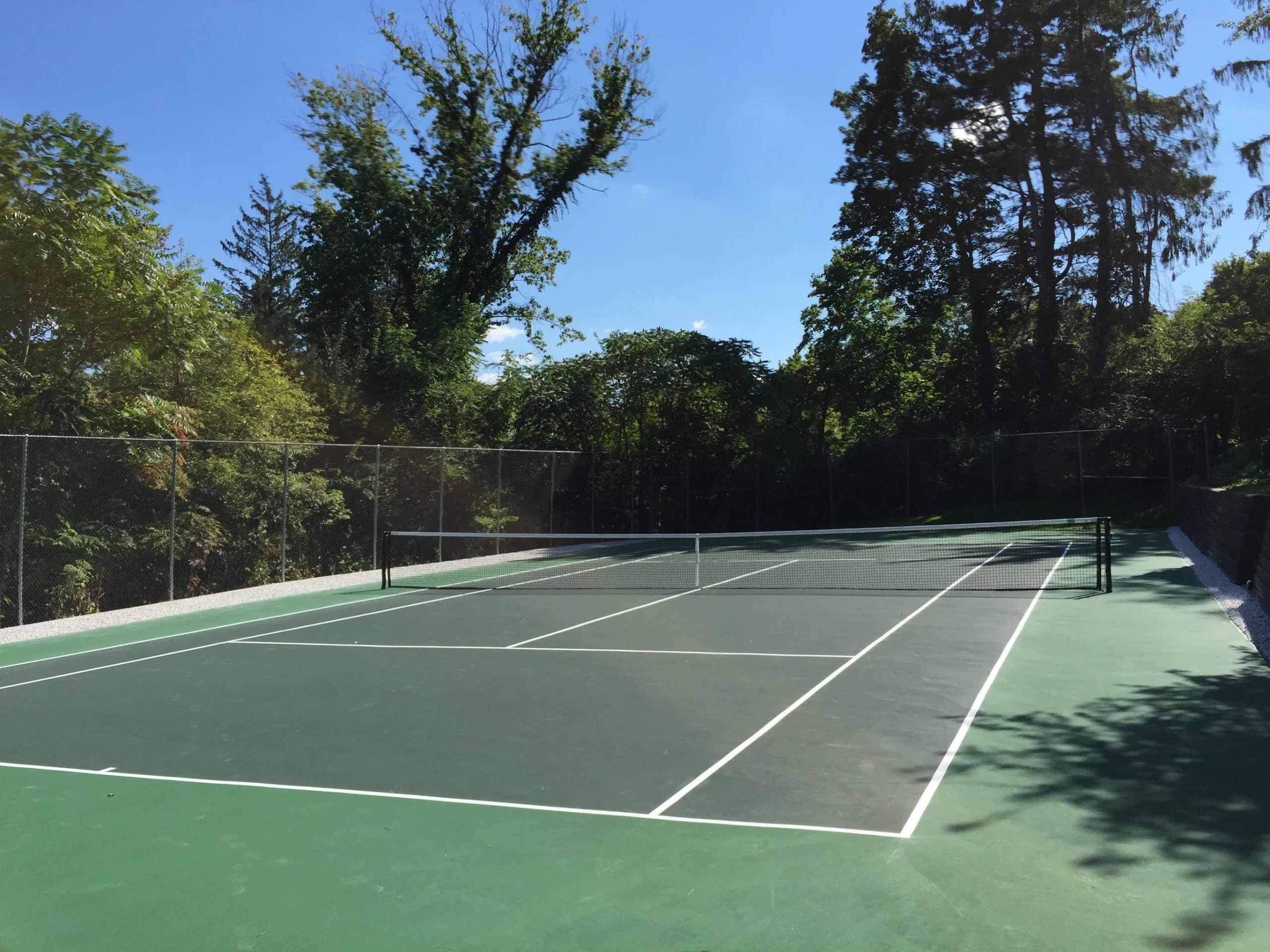
Tennis Courts
Backyard, club, and town courts with a smooth, consistent surface that plays like a traditional hard court.
Pickleball Courts
Standalone pickleball courts or pickleball lines added to a tennis court, all on a slab built to last.
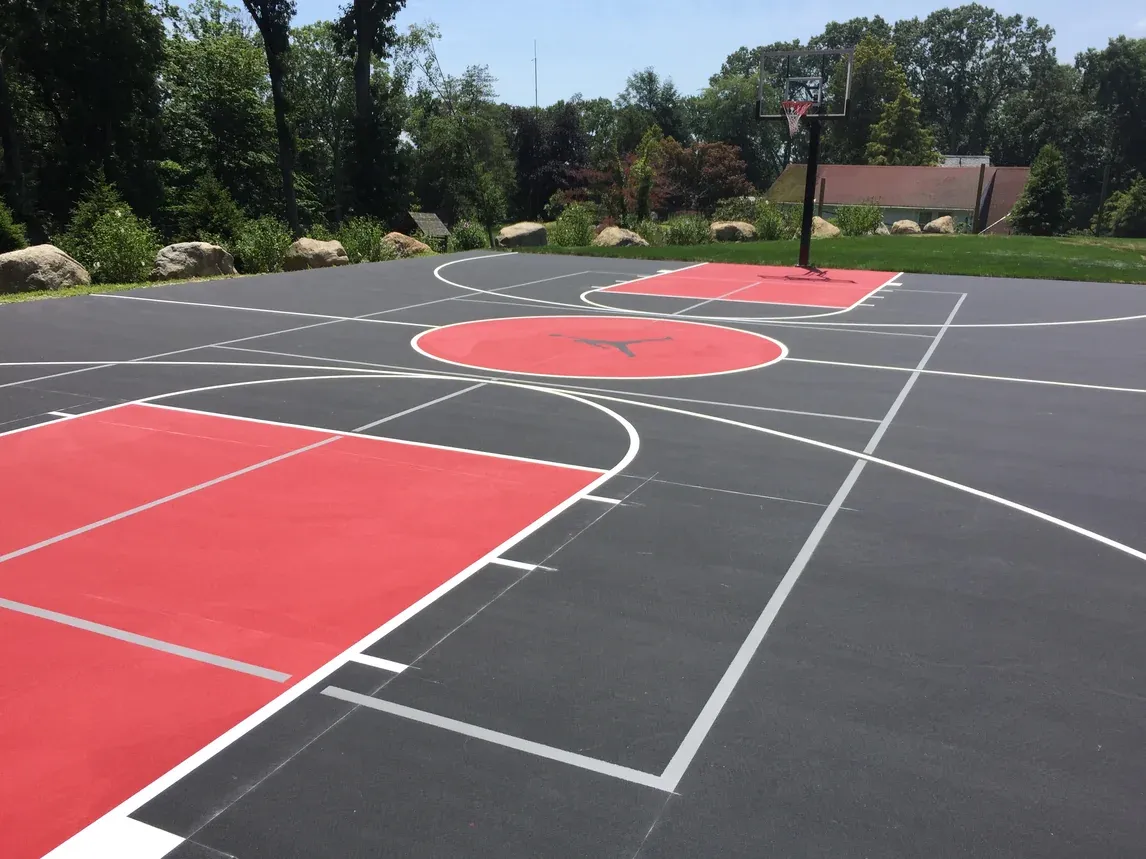
Basketball Courts
Half courts to full-size courts that hold up to constant dribbling, pounding, and New England weather.
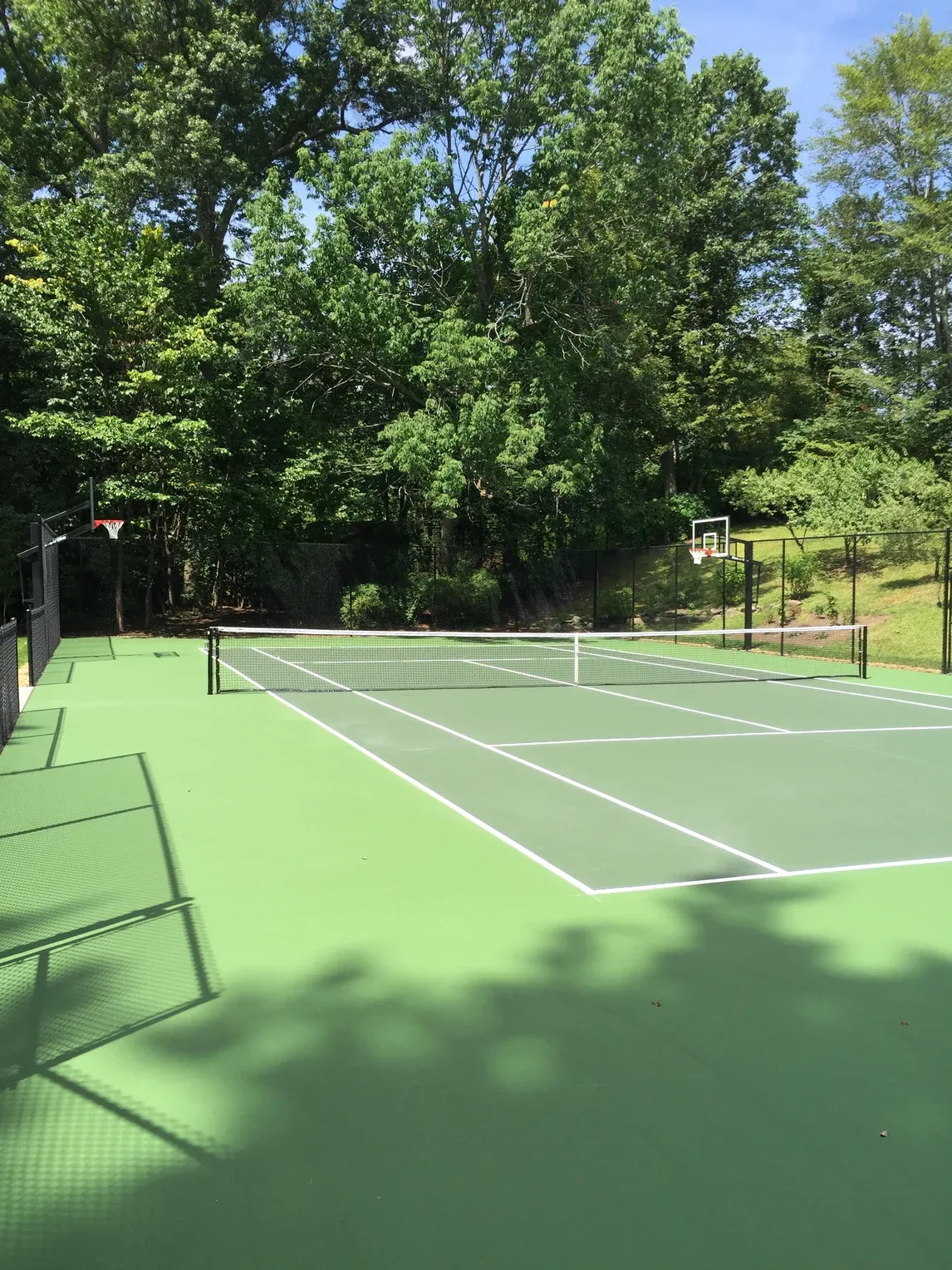
Multi-Sport Courts
One durable slab lined for tennis, pickleball, basketball, or whatever combination your family or town plays most.
Skate Parks
Post-tensioned concrete gives skate parks the strength and joint-free surface riders need.

Compare Your Options
Post-Tension Concrete vs. Asphalt Courts
Asphalt is the most common court in the area, so it’s the comparison we hear about most. Here’s how they stack up.
Benefits of
Post-Tensioned Concrete
Kept in constant compression, so it resists cracking, heaving, and settling
Built with no control or cut joints, for smoother play and better durability
Can often be installed right over an existing asphalt or clay court, saving on demolition costs
Ideal for new construction on New England’s shifting soils
Plays the same as a traditional asphalt court
The lowest-maintenance court we build
What to Expect With
Asphalt Courts
Often a lower upfront cost
Prone to cracking from freeze and thaw cycles
Cracks tend to return, even after repair
Usually needs crack repair and resurfacing more often
Can heave or settle as soil moves underneath
A familiar playing feel, which post-tension matches
Still deciding? Get in touch with us today and we’ll help you weigh the upfront cost against long-term upkeep for your property.
Skip the Demolition
Post-Tension Over an Existing Court
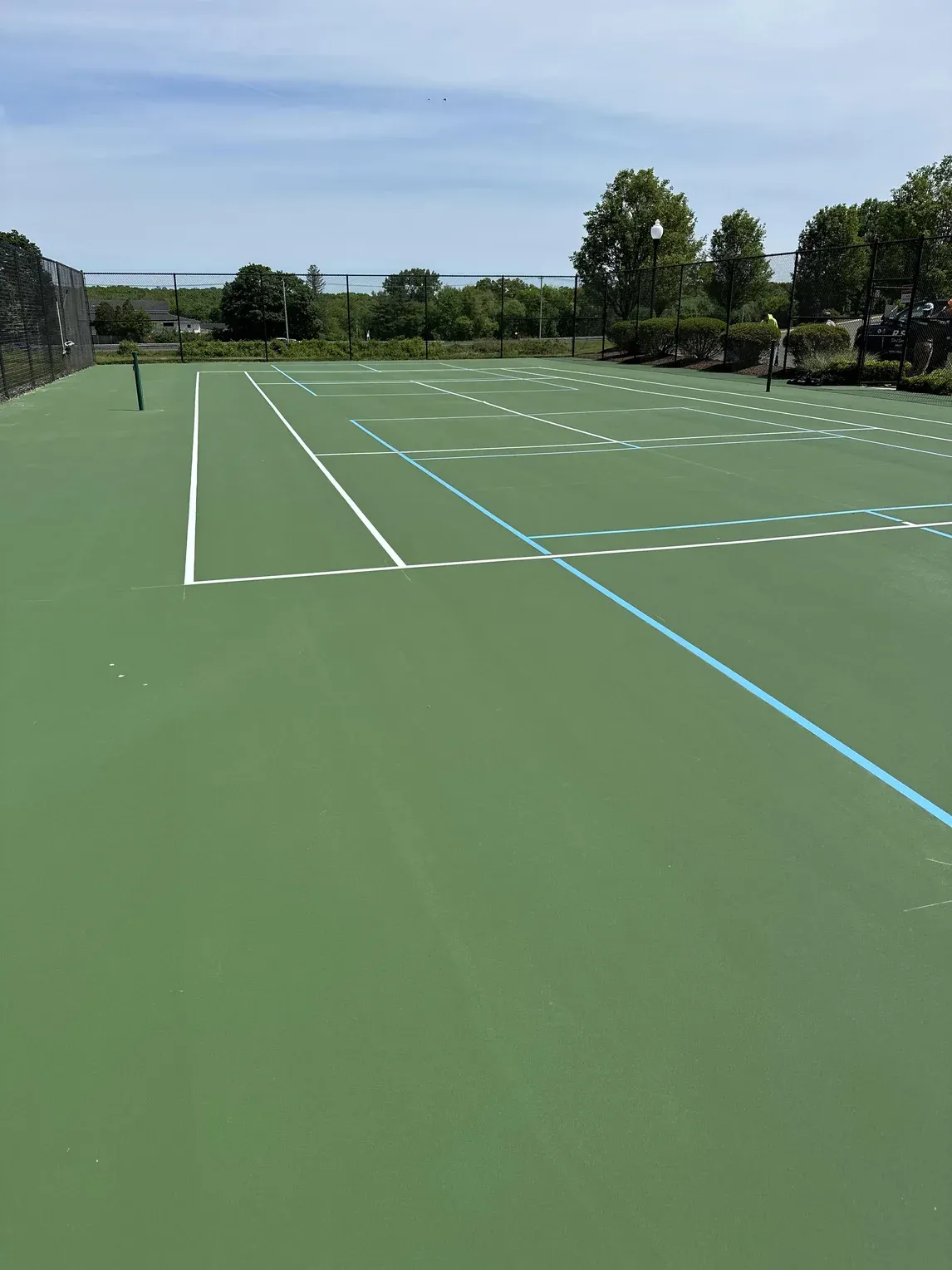
If you already have a cracked asphalt or clay court, you may not need to tear it out. In many cases, we can build a new post-tensioned slab right over the existing court, which saves you the time and cost of demolition. During the site visit, we’ll look at the old court along with grade, drainage, and utilities. With our Connecticut P-7 and septic licenses, we can handle any site work your new court needs, all in-house.
Common Questions
Post-Tension Court FAQs
What is a post-tension tennis court?
It’s a concrete court reinforced with high-strength steel tendons that are tightened after the concrete cures. That tension keeps the slab in constant compression, so it resists cracking and doesn’t need control joints.
Will a post-tension court crack?
Post-tension courts are built to resist the cracking, heaving, and settling common to asphalt. Because the slab is held in compression, it’s far better at handling freeze and thaw and soil movement.
Can a post-tension court go over my existing court?
Often, yes. Post-tensioned concrete can usually be installed right over an existing asphalt or clay court. We’ll confirm during the site visit.
Does a post-tension court play differently than asphalt?
No. A post-tension court plays the same as a traditional asphalt court, without the joints and cracks.
Is a post-tension court worth the investment?
For most homeowners and towns, yes. With far less crack repair and upkeep over the life of the court, post-tension tends to pay off in the long run. We’re happy to walk you through the numbers for your property.
Where We Build
Post-Tension Courts Across CT and Westchester
We build post-tension courts throughout Connecticut, including Fairfield County, Westport, Greenwich, and New Canaan, as well as across Westchester County, NY.